Youth who find themselves in the juvenile court system in Contra Costa County must traverse the legal system and other challenges while also grappling with growing up and dealing with the consequences. Now they have another place to connect and receive positive reinforcement as they are given tools to hopefully not only aid in their rehabilitation but also their self-esteem.
In Contra Costa County this year, there have been an average of 78 youths in custody per month, according to a data dashboard posted on the Board of State and Community Corrections website.
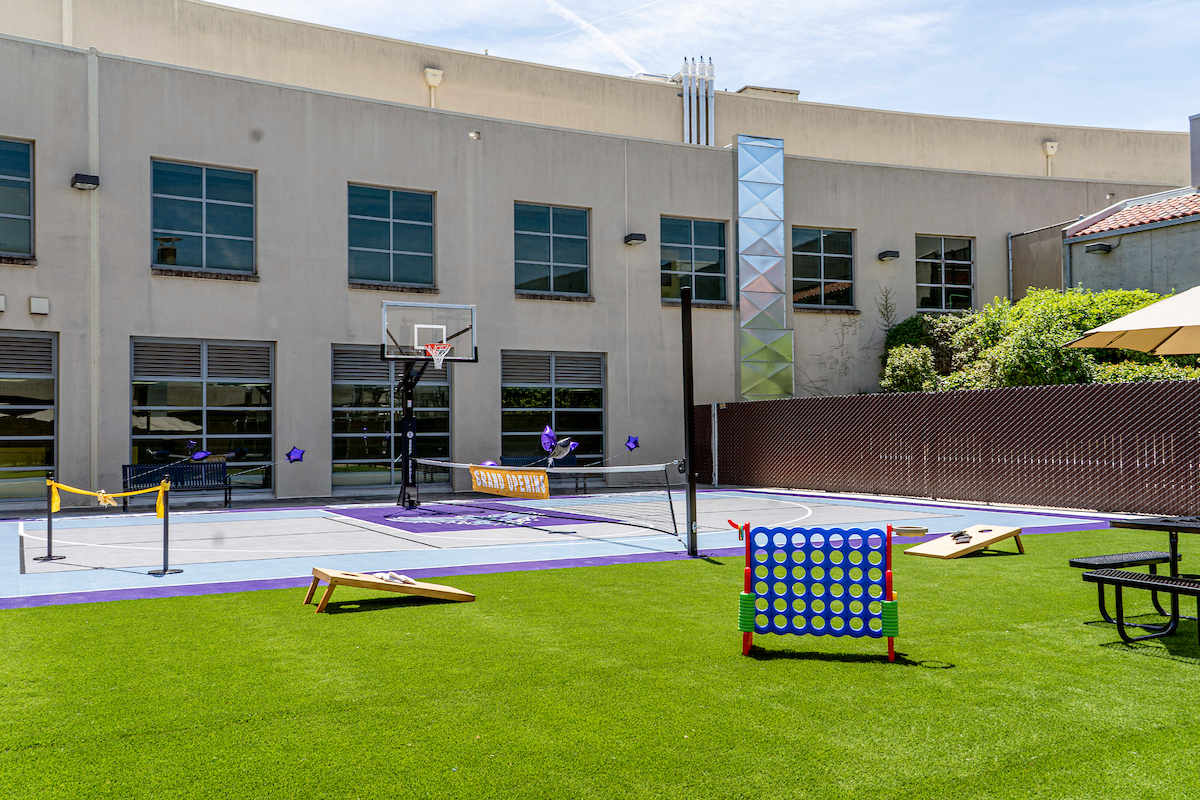
In May, the Contra Costa County Probation Department held a ribbon-cutting ceremony for the recently renovated multiuse courtyard at the John A. Davis Juvenile Hall detention center in Martinez called the Family Engagement Courtyard.
According to the county, this renovation stems from a continuously growing understanding of criminal justice in general, as well as a greater understanding of youth development and the effects of trauma. More specifically, it comes from an insight into how a person’s environment impacts their progress during rehabilitation. The maximum-security detention facility is guided by the mindset that programs should be done with youth, not to youth.
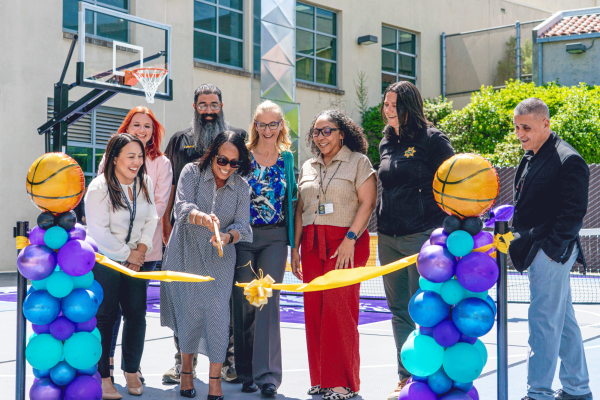
“Historically, many facilities were designed primarily around security and operational needs,” said Mila Baranov, a probation manager at the juvenile detention center. “We are focused on designing spaces that balance safety with opportunities for learning, family engagement, recreation, treatment, and personal growth.”
The renovation expanded a previous space at the detention center to include a multisport recreational court as well as an area to host events and activities for youth, their families, or guardians — in short, the people who keep them tied to their own community.
“This courtyard represents far more than a physical renovation — it reflects our commitment to creating both opportunities and spaces where young people can heal, grow, and thrive,” said Chief Probation Officer Esa Ehmen-Krause in a news release from her office. Ehmen-Krause, who oversees all aspects of the county’s juvenile justice program, including budgeting and policy creation, said that youth were consulted about every aspect of the new space’s design.
According to Baranov, one of the most important components of youth rehabilitation is how involved and connected families are in the process; they provide the most support, encouragement, and accountability in their lives. The hope is that this courtyard goes beyond recreation and serves as a space for familial connection by being “inviting, comfortable, and conducive to meaningful interaction.”
“We want youth and their families to have opportunities to spend quality time together, rebuild trust, strengthen relationships, and create positive experiences that can serve as a foundation for future success,” said Baranov.

The programs at the detention facility are guided by a philosophy of viewing rehabilitation as a process of personal growth — a mix of accountability, providing opportunity, and support. According to Baranov, lasting change starts when someone is provided with these three things. She said the environment can have a big influence on how a child fares in the juvenile justice system.
The detention facility offers a range of services catered to individuals’ needs, including vocational training, behavioral health therapy, substance use treatment, spiritual care, and family engagement; additionally, the facility offers programs meant to guide youth toward healthy decision-making and prepare them for real-world challenges. The facility is meant to help build strong relationships between youth and staff.
 While providing them with the opportunities to develop and practice the skills needed post-release, Baranov emphasized that reentry planning begins at the start of a youth’s arrest and confinement. But support does not end with release. All youth and families continue to work with the same probation officer and behavioral health clinician during their stay. Additionally, they rely on the support of community organizations, such as 1 Hundred Years Enterprise, a foundation that aims to connect directly with at-risk youth to reduce incarceration.
But if families are an important part of a youth’s outcome, with a percentage of incarcerated youth being in the foster care system, how do these goals of familial connection change?
“While family engagement remains important whenever it is safe and appropriate, we recognize that connection looks different for every youth,” said Baronov.
For those coming from foster care, the goal remains the same: to help them build and maintain positive relationships with trusted adults in their lives, whoever they may be.
Additionally, Baranov acknowledges that the reentry process is different for youth who do not have a home to return to.
“A youth may transition to a less restrictive program (LRP) in the community, reunify with siblings or extended family members, reside with supportive adults who can provide stability and guidance, or pursue opportunities such as college housing,” she said. “A facility should be safe and secure; it should also reflect the belief that young people are capable of growth, change, and building a positive future.”
Baranov said one young person contributed to the courtyard project by making a detailed pencil drawing of the Briones Youth Academy’s mascot, the Phoenix. The academy is a collaboration between the county Office of Education and the Probation Department that provides academics, therapy, and skill-building as an alternative to incarceration. The final design was featured on a walkway in the new courtyard. Around the mythical bird are the words, Believe, Evolve, Rise.
Baranov said that the youth were deeply involved in discussing what this symbol meant to them.
“Resilience, transformation, and the ability to rise above challenges,” she said.
The boy’s original version was a jumping-off point for the final design, but the true value of having input from people like him was working through the process together, Baronov said.
“The youth learned that their voices matter and how collaboration works in the real world,” she said. “The goal isn’t to always get exactly what you want; it’s to work with others to create the best possible outcome.”