In an increasingly digital age, artificial intelligence, or AI, is under constant scrutiny for its vast potential but also for its use in fabricating school essays, making deep-fake videos of people, and even for offering online medical advice.
AI-generated art is an especially controversial topic, with the central question being, “Is AI art still art?” Can I, as the viewer, still admire a piece of work despite how it came to be, or even because of it? Is the human touch essential to the creative process?
Although no mainstream films have been fully created using AI, the technology is creeping into the art form. But should it?
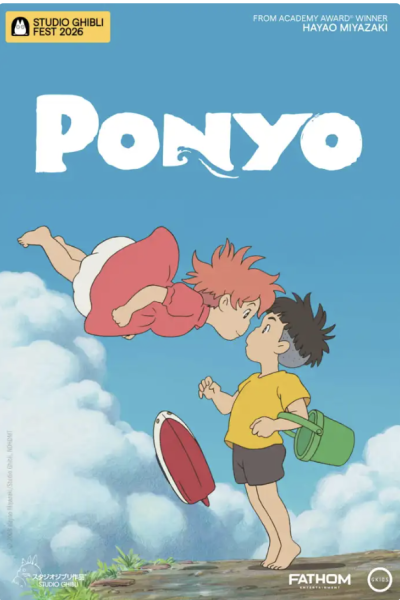
One of my favorite movies growing up was 2008’s “Ponyo.” It was colorful and bright, had a compelling and magical story involving evil sorcerers and sea goddesses, and most of all emphasized the importance of familial love, acceptance, and belonging.
When I was older, I became more curious about director Hayao Miyazaki’s process. Eventually, I stumbled on an interview where Miyazaki explained that he made this animated movie for those children who felt out of place in their families and gave them a piece of art showing that belonging and true, unconditional love and acceptance are possible. On a subconscious level, as a child, I might have connected to this element, but hearing this explicitly as a teenager made me realize why the film worked so well for me and also the deliberate intentions behind those who made it — I was shown the human prints that made up the mosaic of this movie.
This is true not only for “Ponyo,” but for all other movies that have made a difference in someone’s life. Being shown the human touch in a dazzling movie enhances our personal connection with it. Fundamentally, this is the essence of art: human connection.
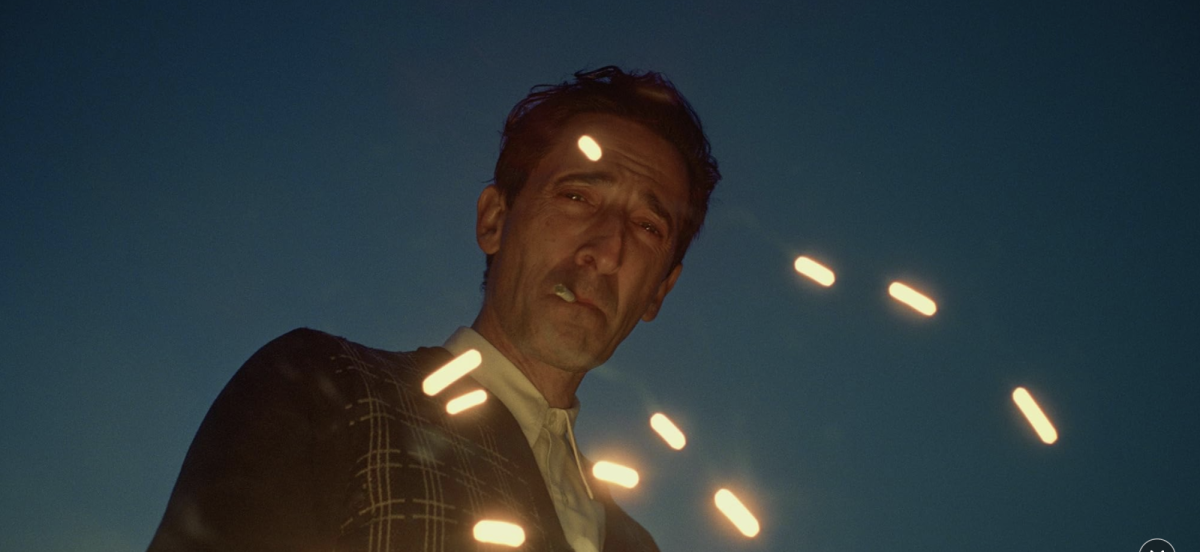
2024’s “The Brutalist” came under fire during last year’s Oscar season for using generative AI to enhance the performances of its lead actors, Adrien Brody and Felicity Jones. Specifically, director Brady Corbet and film editor Dávid Janscó used the software Respeecher, which specializes in generating AI voices. Corbet and Janscó used this software to manipulate Brody and Jones’ voices so their Hungarian-speaking parts would sound more authentic.
These additions may seem subtle and inconsequential, but it’s exactly because AI has the potential to be undetectable that even the possibility of its presence in art is insidious. And even if audiences learn to admire AI effects more than human-made ones, they could also learn to devalue labor and creativity in general.
Generative AI should not be used in movies. It results in a lower-quality watching experience, and it outsources the creative labor that goes into making movies.
When audiences choose to watch a movie, there is an implicit understanding that what they see is the result of a combined effort — it is taken for granted that humans worked on this, with the director being at the forefront of a production. Using AI, even with disclosure, undermines the trust between a director and the audience, which could also spread to other people involved in the production. How will audiences know that this will not be a repeat offense? This also places an unwanted burden on the audience — detecting AI and determining whether what they are seeing is original or not shouldn’t be part of an audience’s obligation when they evaluate movies or any other art form.
AI use could also fundamentally change why movies turn out bad in the first place. If its use becomes prevalent, movies will no longer fail because of actions before, during, or post-production, but because AI robs the process of human agency and accountability altogether.
That’s not to say that film can’t have fantastical elements. Over the course of cinema’s history, audiences have always revered “movie magic” — so much so that audiences sometimes forget these technological advancements have been labored on by human hands and pioneered through human ingenuity.
Most viewers know Tim Burton’s stop-motion films like “The Nightmare Before Christmas” (1993), “Corpse Bride” (2005), and “Frankenweenie” (2012), or other non-Burton stop-motion productions such as “Coraline” (2009), directed by Henry Selick, but they might not be aware of the full extent of the work involved: “Coraline” used over 6,333 pieces for the title character’s face! Wes Anderson’s “Fantastic Mr. Fox” (2009) and “Isle of Dogs” (2018), stop-motion movies featuring animals, were known for the “fur boil” made on the puppets’ faux coats by the fingers of the animators — literal evidence of the human touch.
Pixar’s “Toy Story” broke boundaries in 1995 by being the first feature-length movie animated entirely through 3D art. But now, audiences who are used to seeing elaborate computer-generated imagery, or CGI, it’s easy to look back at “Toy Story’s” animation as rough around the edges, maybe even primitive.
The purpose of “The Brutalist’s” sound design was to smooth those perceived rough edges and to touch up Brody and Jones’ vocal performances. We always hear about the lengths actors go to to get into character and have their portrayals seem authentic, but then this begs the question of how much authenticity that we, the audience, demand. We might expect that Brody, an actor of partial-Hungarian descent, might have some grasp of the language, but the language itself is hard to learn. Would we expect Jones, a British actress, to have a firm grasp of Hungarian after a few lessons with a language instructor? Given the lengthy production time and the comparatively small budget, additional time spent learning Hungarian would eat heavily into the time and money invested in “The Brutalist.”
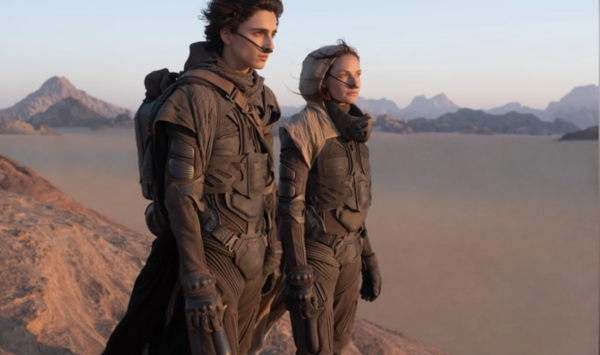
The sound design and soundtrack of “Dune: Part One” (2021) were made through the ingenuity and experimentation of Mark Mangini and Hans Zimmer. Mangini’s team made the omnipresent hissing of sandworms through recording sand vibrations in the desert, and Zimmer abandoned traditional orchestral scores and used instruments built by Chas Smith. However, Zimmer still used the human voice. “The one thing that would not age, the one thing that would still be valid in the future,” he said. Zimmer manipulated sound and the human voice to intergalactic extremes to produce “Dune’s” unique sound, the sound of the desert.
“Dune’s” sound editing is more deserving of praise because it is a human interpretation of what is supposed to sound unearthly and not of this world. What makes the use of sound technology innovative in this case is that everything the audience hears, though it sounds abnormal and completely alien, is deeply rooted in everyday objects and phenomena we are all familiar with. Rather than discarding the human voice or rendering everyday sounds as obsolete, both teams find a way to manipulate it in ways that reveal the creator’s fingerprints while at the same time using technology resourcefully.
Topics like this cannot be approached as sensitively, deliberately, or in as nuanced a way when AI does the heavy lifting of retaining subtlety and respect. Nothing can replace a human touch.