Editor’s Note: This is first of two stories on the high-stress world of AP exams.
As the end of the school year approaches, many high school students have been dreading one particular moment: Advanced Placement exams.
Well, it’s here.
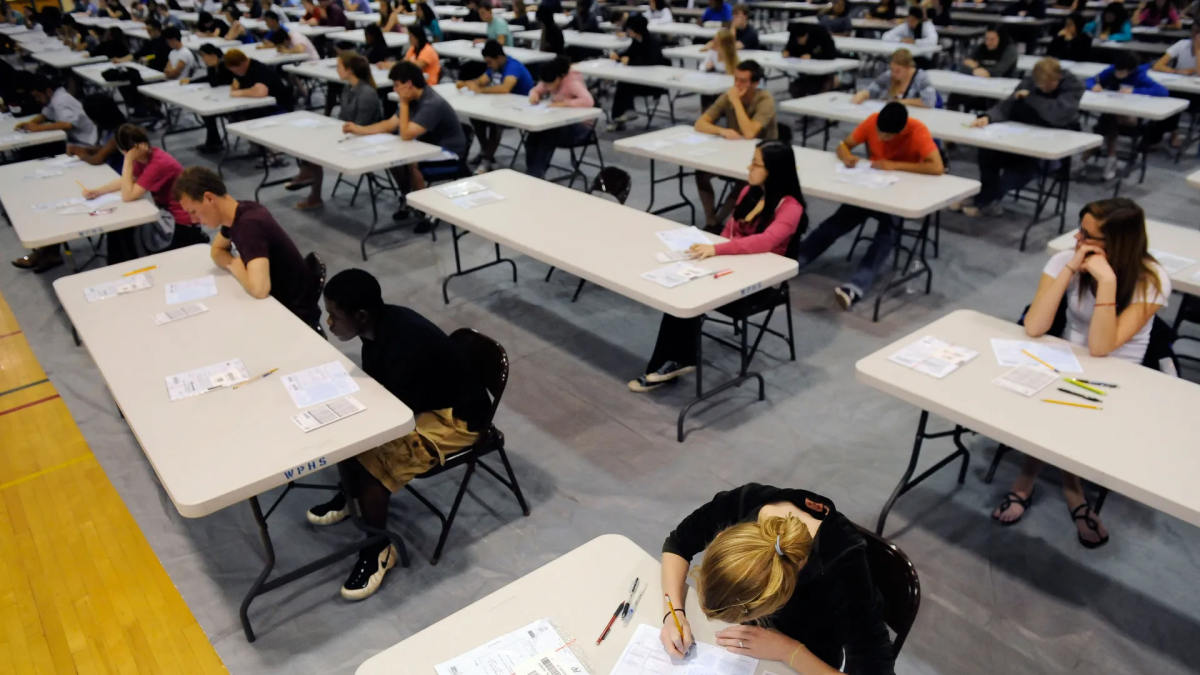
With exams taking place the first two weeks in May, students across Contra Costa County and the United States are in the midst of finalizing preparations for multiple college-level tests, often balancing heavy class workloads with increasing stress.

According to the College Board, the official organization that administers AP exams, more than 1.3 million students nationally signed up to take an AP exam during the 2024-2025 school year. With 38 different courses available, that figure could surely rise this year as these courses are seen as a way for students to prepare for college and reduce tuition costs.
The College Board charges $99 per AP test, but most students pay upward of $129 because of schools’ administrative fees or because the exam is taken outside of the United States. Although these exams might seem costly, they can save students a significant amount of money in tuition costs. By earning a 3 or higher on an AP exam, students may be able to earn between three and five college semester units.
With the pressure of colleges and standards to take more rigorous courses, students are increasing their workload more than ever.
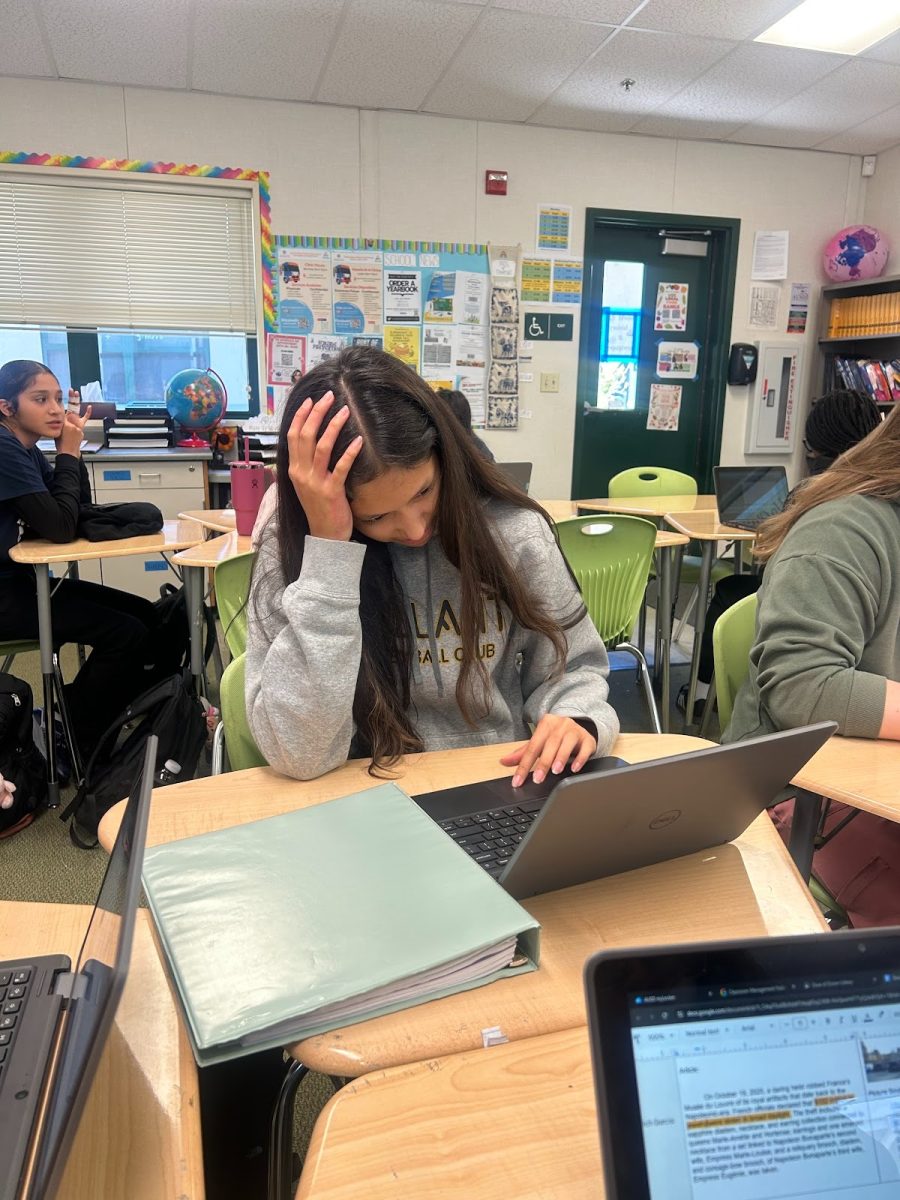
Kaitlyn Glickstein, an 11th grader at Liberty High School in Brentwood, said she feels stressed at times from taking three AP courses.
“Most of the time I’m pretty stressed about my AP classes and exams,” said Glickstein, who is enrolled in AP Environmental Science, AP Language and Composition, and AP Psychology. “I try to stay on top of all my work, but as it starts to pile up. It’s hard to keep track of everything.”
Like many students taking multiple AP exams, Glickstein said the workload becomes more difficult to manage as testing approaches, especially when each class has its own expectations and assignments.
Not only does AP exam season create academic stress, but it can also impact students’ sleep. Eunice Frimpong, a third-year student at the University of California, Irvine, reflected on her time as a high school student studying for AP exams.
“I wasn’t going to sleep until 3 [a.m.] because I was trying to finish assignments or read paragraphs while also studying for AP exams,” Frimpong said. “AP classes hardly let you sleep at a good time.”
For first-time test takers like Joshua Addo, a 10th grader at West High School in Tracy who is enrolled in AP World History and three honors courses, the pressure is a new experience.
“I do feel pressure to take as many AP classes as possible because of the expectation of top colleges and other classmates, but I do feel like taking them is worth it,” Addo said. “I did feel stressed and overwhelmed at first by my workload while studying for AP testing, but … it’s actually going well. I was able to review a little bit and scored a 5 on my practice exam.”
Although some students say that while AP classes can be extremely stressful, they can be very beneficial in the long run. Natalia Cortez, the 2026 valedictorian at Dozier-Libbey Medical High School in Antioch, took a total of 10 AP courses while in high school. Despite the challenges, she said she does not regret taking all of those classes.
“I’m not going to lie, I did feel stressed from studying and taking AP courses, but I’ve never felt like I shouldn’t have done it,” Cortez said. “Some classes are going to be easier than others, so taking advantage of that when studying can make it easier.”

For some students who feel overwhelmed by the stress and stigma AP exams bring, other options for getting ahead in college credits are available. Uyai Umo, a second-year student studying at the University of California, Los Angeles, suggested that dual enrollment through community college can be another way to earn college credit in high school.
“Coming into college with credits is a huge advantage,” Umo said. “You don’t realize how much it matters until you’re actually here and see how much time and money it can save.”
As AP testing season is underway, students are left balancing academic pressure with personal well-being and future goals. While many feel stress from managing multiple college-level courses, Dozier-Libbey counselor Karen Mahan emphasizes that AP classes are only one part of a student’s academic journey.
“It’s not a make-or-break situation,” Mahan said. “Every step you take helps prepare you, but one test doesn’t define you.”