Editor’s Note: ShraddhaGouri Pallerla recently reported on options high school students have if they want to graduate from high school early.
While reporting on early high school graduation, I’m also navigating the process myself. I’m a 16-year-old 10th grader at Heritage High School; just six weeks ago I was preparing to take the HiSET exam that would determine whether I could graduate early.
The decision to pursue this path didn’t happen all at once, but developed over time as I began exploring what my options after high school could look like.
I first remember hearing about early graduation during a meeting with my school counselor. I was sitting across from her at a small desk in her office while she explained different options students had after high school. As she spoke, she mentioned the possibility of graduating early through an exam pathway. I remember nodding and following along, but at the time, it didn’t feel like something that applied to me. I left the meeting understanding the idea but not really considering it as a path I would take.
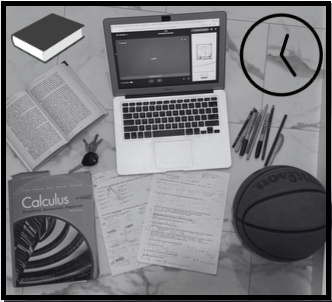
A few days later, I found myself looking it up on my own at home. I opened my laptop and searched for information about the process, clicking through different pages that explained the requirements and steps. I remember reading the same sections more than once because I was trying to picture how someone would actually go forward. Even though the information was there, it felt separate from my daily life, like something outlined in theory rather than something I could see myself doing.
That started to change slowly. I brought it up with my parents one evening, not expecting a definitive response right away. My mom paused for a second before responding. She didn’t say no, but she didn’t immediately say yes either. She asked me questions instead: why I wanted to do it, what I thought I would gain, what I might be giving up. I remember the tone of the conversation changing slightly, becoming less about giving permission and more about understanding what I was actually considering. The conversation didn’t move quickly. There were pauses between questions and answers, and I remember having to think more carefully about how to explain my decision beyond just the surface-level reasons I had in mind. But later that night, I kept thinking about the questions she asked. I found myself wondering not just whether I could do this, but how I would feel if I were in her position; watching my own child try to move through something I had never even thought of.
Turning away
In the weeks that followed, I began noticing how much of my day moves on its own. Between classes, I take the same hallway because it’s the route my body has settled into over time. I drift to the right side to avoid the main flow of students, step around the same clusters that form near the lockers, and adjust my pace without really deciding to, slowing down when the hallway narrows, picking it back up when it opens again. Near the stairwell, I already anticipate the brief slowdown and angle myself early so I don’t have to stop completely. At my PE locker, I enter the combination without hesitation, more out of muscle memory than conscious recall, and the door opens as I’m already turning away. In those moments, I’m aware of how little I’m actively thinking through; the sequence of the day unfolds in familiar steps, and I move through them without needing to pause and plan what comes next.
At the time, the question was, am I ready to change my familiar routine?
There are still moments where everything feels clear. When I think about my long-term plan: going to Diablo Valley College, studying electrical engineering, and eventually transferring to a UC, it feels intentional. Like a decision that becomes clearer over time.
But that certainty shifts.
Usually, the doubts show up when things are quiet, especially when I’m studying on my own. I’ll go through practice questions, think I understand them, then stop and reread just to be sure. Even when I get something right, I’ll check it again, wondering if I missed something small. Sometimes I’ll redo a problem from the beginning just to see if I get the same answer twice. It’s less about the question itself and more about making sure I didn’t get there by accident. As the test date gets closer, I notice I do this more often.
Following instructions
The morning of the first exam day started earlier than it needed to. I woke up before my alarm and stayed in bed for a few minutes, already thinking about the sections I was most unsure about. By the time we left the house, everything felt slightly off. On the drive to Concord, the car stayed quiet. My dad kept his eyes on the road, one hand on the wheel, the other resting near the gear shift. I looked out the window at exits and stoplights passing by, not focusing on anything in particular. I almost said something at one point, but didn’t. The silence stayed the rest of the drive.
The first testing session that day was scheduled from 10:30 a.m. to 1 p.m., covering reading and writing. After checking in and being assigned a computer, I followed the instructions on the screen and began the reading section. The room had multiple students taking different sections at the same time, with the only consistent sounds being typing and occasional movement. During the reading section, I noticed I was rereading passages more than once to make sure I understood the question being asked before selecting an answer. For writing, I focused on structure and clarity, reviewing responses before moving.
After finishing that session, I left the testing center and went home. The rest of the day didn’t feel fully resolved, since I still had the math exam scheduled separately. Over the next few days, I kept thinking back to specific questions from the reading and writing sections, especially ones where I had paused or debated between answers. I didn’t have a clear sense of whether I had done well or not, and that uncertainty stayed in the background.
Three days later, I returned to take the math section. This session was shorter, about 90 minutes. The process felt similar in terms of setup; check-in, computer assignment, and instructions before beginning. But the content required a different kind of focus. While working through the math problems, I wrote out steps for each question and went back to check my work before selecting an answer. Even when I reached a solution, I often reviewed it once more to confirm I hadn’t made a simple error. The pace felt steady rather than rushed, with time spent verifying calculations as much as solving them.
Had I missed something?
When I finished the math exam and submitted my responses, the test felt complete in a way it hadn’t after the first session. Still, walking out, I didn’t have a clear sense of how I performed overall. On the drive home, I thought through specific problems from both days, trying to recall how I answered them. Part of me felt confident in certain sections, but there was still a lingering uncertainty that I had missed something.
A few days later, the results came in.
I passed all three sections!
There wasn’t a single moment where everything suddenly felt different. Instead, it was quieter than I expected. The uncertainty that had been there for weeks was gone, replaced by something more settled. The plan that had been conditional, based on a result I didn’t control yet, was now something I could move forward with.
Now, the plan moving forward is enrolling at Diablo Valley College and continuing with coursework aligned with my intended major in electrical engineering.
Now, it’s just about following through.